Pixel Rose
By Cross Stitch Library · July 16, 2026
FloralIntermediateFree
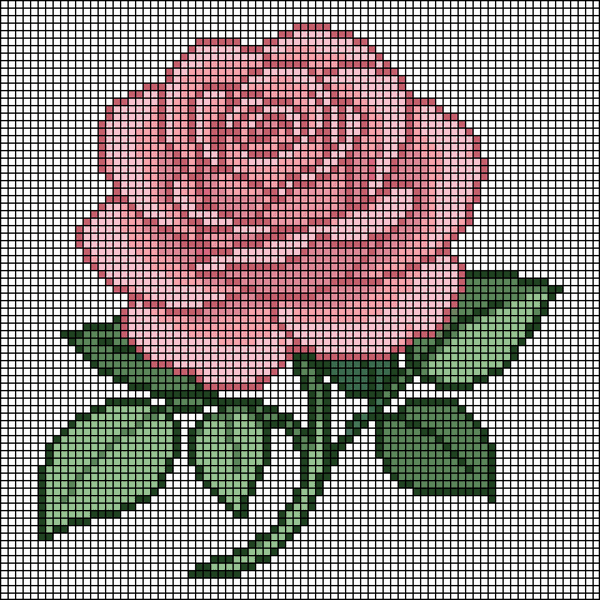
A single blooming pink rose rendered in bold pixel-art style, perfect for a quick, modern accent piece or a heartfelt handmade gift.
↓Your pattern is at the end of this page, right after the stitching guide below.
- Stitch Count
- 70 x 74
- Finished Size
- 5.0" x 5.3"
- Thread Colors
- 16 DMC
- Stitches Used
- Full cross stitch
A single rose, fully open, with the spiral of overlapping petals worked in five shades of dusty pink instead of one flat color. At 70 x 74 stitches it’s a near-square design that reads as a classic single-motif piece rather than a busy scene.
About This Pattern
The rose is the flower every stitcher eventually makes at least once, and this pixel-art version gives it a more graphic, modern edge than a traditional shaded chart — the flat color blocks read as confident from across a room instead of soft and painterly. It works as a quick anniversary or Mother’s Day gift, or as the anchor piece if you’re building a small floral gallery wall alongside our tulip or daffodil patterns.
Pattern Details
- Stitch count: 70 x 74
- Finished size: 5.0“ x 5.3“
- Thread: 16 DMC colors (full list in the PDF)
- Stitches used: Full cross stitch
Skill Level
Every stitch is a full cross stitch, but the petal shading pushes this past beginner territory: five closely related pinks — DMC 963, 223, 761, 3354, and 151 — handle the petal gradient and together make up roughly two-thirds of the design. Getting those five sorted correctly on your floss card before you start is the real skill test here, not the stitching itself.
What’s Included in the Download
- Full color chart (PDF, printable)
- DMC thread color legend with exact stitch counts per color
- Fabric and floss requirements, including skein estimates
Tips for Stitching This Pattern
Lay your five pink shades out in a gradient strip next to your hoop before you start stitching — 963 (Ultra Very Light) through 151 (Very Light) look nearly identical under warm indoor light, and having them physically ordered light-to-dark saves you from constantly re-checking the chart’s color key. The leaves use a much smaller, easier-to-track set (895, 320, and touches of 3815 and 522) — stitch those after the petals so you’re not switching back and forth between the pink family and the green family more than necessary. See our pixel art cross-stitch guide for more on this flat-color style, or our botanical pattern roundup for more cut-flower designs to pair it with.